
Monsoon & Seasonal Hair Fall: Causes, Prevention, What Works

Stop Blaming the Rain: The Real Reasons Behind Monsoon Hair Fall
The Complete Science-Backed Guide to Understanding Seasonal Hair Fall, Choosing the Right Routine, and Finding Products That Work.
About This Guide
Every year, the arrival of the monsoon brings relief from scorching summer temperatures. But for many people, it also brings monsoon hair fall: hair on the pillow, in the shower drain, on your comb and on your clothes. And seasonal shedding often doesn't stop when the rain does.
Introduction
You wait months for the first spell of rain. The air smells fresh. The temperature drops. Everything around you feels alive again. Then, one morning, you notice something unsettling — a few extra strands of hair on your pillow, a slightly fuller shower drain, more hair wrapped around your comb than usual.
Within days, a simple question begins to echo in your mind: "Why is my hair falling so much during monsoon?" If you've asked yourself this question, you're far from alone. Seasonal hair fall is one of the most searched hair care concerns during the rainy season, yet it's also surrounded by myths, conflicting advice, and miracle cures that rarely stand up to scrutiny.
Research suggests that seasonal changes can influence the natural hair growth cycle, while increased humidity, sweat, scalp oil, and microbial growth during monsoon may create conditions that make temporary hair shedding more noticeable. This guide was created to separate facts from fiction — and you'll leave with a practical 30-day action plan that helps you focus on consistency instead of chasing overnight results.
Join The Natural Move community — practical, science-backed routines for hair, skin and natural living. No spam, just what genuinely works.
Join the Community →Why Does Hair Fall Increase During Monsoon?
"It's not the rain that's attacking your hair. It's the chain reaction happening on your scalp."
Have you ever noticed that your hair seems perfectly normal during summer, but the moment the rainy season arrives, your comb starts collecting more strands than usual? If yes, you're not imagining it. Seasonal hair shedding is a real phenomenon — but one of the biggest misconceptions is believing that rainwater directly causes hair fall.
Hair doesn't suddenly start falling because it gets wet in the rain. Instead, the monsoon creates an environment that affects your scalp, and your scalp health plays a major role in determining how healthy your hair remains.
Hair shedding may appear more noticeable during the monsoon, but humidity alone does not establish the cause of hair loss. Sweat, damp hair and changes in hair-care habits can affect scalp comfort and hair manageability. A gentle routine can help maintain scalp hygiene and reduce avoidable hair breakage.
3 Practical Monsoon Hair-Care Steps
- Clean your scalp regularly: Wash according to your scalp's needs with a suitable shampoo, particularly after heavy sweating. Rinse thoroughly.
- Handle wet hair gently: Avoid vigorous rubbing and aggressive brushing. Detangle carefully with a wide-tooth comb to help reduce breakage.
- Dry your hair and scalp comfortably: Gently pat away excess water and avoid keeping your scalp damp for prolonged periods.
Note: Seasonal timing does not necessarily mean weather is the cause of hair loss. Seek advice from a dermatologist if shedding is persistent, sudden or patchy, or if you experience significant itching, scaling or scalp inflammation.
A well-known study published on PubMed found that many healthy women experienced increased shedding during specific times of the year, supporting the idea that seasonal variation in the hair growth cycle does exist. Another review on Telogen Effluvium — a common type of temporary hair shedding — explains that changes in the hair growth cycle, combined with triggers such as illness, stress, nutritional deficiencies, or environmental factors, can temporarily push more hairs into the resting phase before they naturally shed.
Can fungal infections cause hair fall? Yes — this is one area where scientific evidence is much stronger. Persistent moisture can increase the risk of certain fungal scalp infections, especially if the scalp isn't cleaned and dried properly. If you notice circular bald patches, intense itching, thick scalp scaling, painful inflammation, or pus-filled bumps, don't rely on home remedies alone — consult a dermatologist promptly. For milder flaking and itching, see our guide to dandruff home remedies.
What about Vitamin D? Many people experience reduced outdoor sunlight exposure during prolonged rainy seasons. While monsoon itself doesn't automatically cause Vitamin D deficiency, lower Vitamin D levels have been associated with several forms of hair loss in scientific studies . Don't self-diagnose — if seasonal shedding is persistent despite a good routine, learning if vitamin D deficiency hair loss is reversible can help you choose the right testing path with your healthcare provider.
⚠️ Evidence Is Limited For: Humidity directly causing hair fall · Rainwater directly damaging follicles · Rain permanently increasing hair loss.
Monsoon Hair Fall Myths vs. Facts: What the Science Shows
"When it comes to monsoon hair care, myths spread faster than the rain. Let's separate what's scientifically supported from what's simply passed around."
Is Your Hair Fall Normal, or a Sign You Should Seek Help?
"Every strand that falls isn't a reason to panic. But sometimes, your hair is sending a message your body doesn't want you to ignore."
Hair naturally follows a continuous cycle of growth, rest and shedding. Every day, it's completely normal to lose 50 to 100 hairs as part of this cycle. During seasonal changes, some people may notice a temporary increase in shedding, which usually settles as the season changes.
| ✅ Usually Normal | May Need Medical Attention |
|---|---|
| Slightly more hair on your comb during monsoon | Sudden heavy shedding lasting more than 2–3 months |
| Hair fall that gradually reduces after the rainy season | Visible thinning or widening of the hair parting |
| Mild increase in shedding after stress or illness | Bald patches or circular areas without hair |
| No scalp pain, redness or itching | Persistent itching, redness, scaling or scalp pain |
| Hair density appears largely unchanged | Noticeably reduced hair volume or receding hairline |
Why timing matters: A high fever, major emotional stress, rapid weight loss, surgery, or nutritional deficiencies may trigger increased shedding two to three months later — a condition known as Telogen Effluvium. This delay often confuses people into blaming the weather or a new shampoo when the actual trigger happened weeks earlier.
When should you visit a dermatologist? Seek professional evaluation if hair fall continues beyond 8–12 weeks, you notice bald patches, severe dandruff that doesn't improve, painful scalp inflammation, thick scaling or pus-filled bumps, or hair loss accompanied by fatigue, unexplained weight changes, or menstrual irregularities.
Choose the Right Hair Care Routine for Your Hair Type
"One routine doesn't fit every head. Understanding your hair type is the first step toward making every product, every wash and every habit work better for you."
Which Hair Type Sounds Most Like Yours?
Your Complete Monsoon Hair Care Routine by Hair Type
"The right routine doesn't need dozens of products. It needs the right habits, followed consistently."
Oily Scalp
Goal: Control excess oil and buildup without over-drying.
Dry Hair
Goal: Restore moisture and protect the hair shaft.
Curly or Wavy Hair
Goal: Reduce frizz while keeping curl definition.
Chemically Treated Hair
Goal: Protect colour and minimise protein loss.
Fine or Thinning Hair
Goal: Maintain scalp health without weighing hair down.
Quick Comparison Guide
| Hair Type | Wash | Oil | Mask | Best Focus |
|---|---|---|---|---|
| Oily Scalp | 3–4x/week | Light, pre-wash | Optional | Clean scalp |
| Dry Hair | 2–3x/week | Nourishing | Weekly | Hydration |
| Curly Hair | 2–3x/week | Optional | Weekly | Moisture retention |
| Chemically Treated | 2–3x/week | Hair lengths | Weekly | Damage protection |
| Fine Hair | As needed | Small amount | Occasionally | Volume & scalp health |
Monsoon Hair Fall Natural Remedies: The Evidence-Backed Ingredient Report Card
"Not all natural ingredients deserve the same level of trust. Here's where tradition meets scientific evidence."
The internet is full of "miracle ingredients" claiming to stop hair fall overnight. At The Natural Move, we evaluated ingredients based on human clinical research, traditional Ayurvedic use, safety profile, and overall practicality — not popularity.
| Natural Active Ingredient | Scientific Certainty Level | Primary Functional Target | Vetting Score |
|---|---|---|---|
| Rosemary Essential Oil | ⭐⭐⭐⭐⭐ High (Comparable to Minoxidil) | Follicle Density & Growth Induction | 9.8 / 10 |
| Tea Tree Essential Oil | ⭐⭐⭐⭐☆ Strong Antifungal Data | Scalp Microbiome Balancing & Flaking | 9.2 / 10 |
| Pure Cold-Pressed Coconut Oil | ⭐⭐⭐⭐☆ Documented Shaft Penetration | Preventing Protein Loss & Tangle Breakage | 9.1 / 10 |
| Pure Moroccan Argan Oil | ⭐⭐⭐⭐☆ High Surface Lubrication | Smoothing Dry, Frizzy, or Coloured Shafts | 8.9 / 10 |
| Bhringraj & Amla Extracts | ⭐⭐⭐☆☆ Traditional (Animal Models Strong) | Traditional Hair & Roots Revitalization | 8.5 / 10 |
| Fenugreek (Methi) Seeds | ⭐⭐⭐☆☆ Moderate Support Data | Follicular Nutrient Nourishment | 7.9 / 10 |
| Pure Aloe Vera Gel | ⭐⭐☆☆☆ Limited Clinical Growth Proof | Soothing Localized Scalp Hydration | 7.2 / 10 |
| Raw Onion Juice Extracts | ⭐⭐☆☆☆ Limited (Specific Patchy Case Data) | Localized Area Circulatory Stimulation | 6.8 / 10 |
Which Ingredient Solves Your Specific Problem?
Bhringraj ⭐⭐⭐
Fenugreek ⭐⭐⭐
Aloe Vera ⭐⭐
Argan Oil ⭐⭐⭐⭐
Rosemary Oil — The Most Promising Natural Ingredient
Among all the natural ingredients we reviewed, rosemary oil has the strongest human evidence. Several clinical studies suggest it may improve hair density, thickness, growth rate, and overall scalp health. One frequently cited study even found rosemary oil produced results comparable to 2% minoxidil after several months of consistent use, though more large independent studies are needed. Best for mild hair thinning, seasonal hair fall, and weak hair roots. Always dilute before applying, and patch test first.
Tea Tree Oil — The Scalp Clean-Up Specialist
Tea tree oil isn't a hair-growth ingredient — its strength lies elsewhere. Research supports its ability to help reduce dandruff by controlling the microorganisms associated with flaky, itchy scalps. Best for oily scalp, dandruff, itching, and seborrheic dermatitis support.
Coconut Oil — The Hair Shaft Protector
For decades, coconut oil has been a staple of Indian hair care traditions. Unlike many traditional remedies, it also has strong laboratory evidence supporting one important benefit: it helps reduce protein loss from hair. A landmark 2003 study published in the Journal of Cosmetic Science (Rele & Mohile) compared coconut, mineral, and sunflower oils, and found coconut oil was the only one that meaningfully reduced protein loss during washing and grooming, in both damaged and undamaged hair — likely because its molecular structure allows it to actually penetrate the hair shaft rather than just coat the surface.
Best for dry hair, frizzy hair, chemically treated hair, and pre-wash oiling to prevent breakage. Current evidence does not show that coconut oil directly stimulates new hair growth — its strength lies in protecting existing hair, not creating new hair.
Argan Oil — The Protector of Dry and Damaged Hair
Argan oil won't magically grow new hair, but that's not why we recommend it. Research shows it can help reduce protein loss, improve softness, and strengthen damaged hair fibres — especially valuable for chemically treated, coloured, or heat-damaged hair.
Bhringraj — Ancient Wisdom Awaiting Modern Proof
Bhringraj has been used in Ayurveda for generations. Laboratory and animal studies are encouraging, showing improved activity in hair follicles, but high-quality human clinical trials are still limited.
Aloe Vera: excellent for comfort and hydration, but no strong evidence it promotes hair growth alone.
Onion Juice: became popular after one small, unreplicated study on alopecia areata — not included in standard dermatology guidelines for general hair fall.
The Natural Move Product Recommendations
"Not every bestseller deserves a place on your bathroom shelf. Here's what made the cut."
To prepare this guide, we reviewed ingredient transparency, scientific support for hero ingredients, Amazon customer ratings, verified reviews, value for money, and suitability for different hair types. For a wider shampoo comparison, see our 5 best natural shampoos for hair fall.
Best Sulphate-Free Shampoos for Monsoon Hair Fall
| Product Profile | Primary Vetting Focus | Key Active Ingredients | Evaluation Score |
|---|---|---|---|
| Pilgrim Spanish Rosemary & Biotin | Hair Thinning & Root Density | Spanish Rosemary, Biotin | 9.2 / 10 |
| WOW Onion & Collagen Shampoo | Strand Weakness & Breakage | Red Onion Extract, Collagen | 10.0 / 10 |
| Mamaearth Rosemary Anti-Hair Fall | Seasonal Shedding Reset | Rosemary, Fenugreek (Methi) | 8.8 / 10 |
| Mamaearth Tea Tree Shampoo | Dandruff & Itchy Scalp Support | Tea Tree Oil, Ginger Extract | 8.7 / 10 |
| WOW Apple Cider Vinegar Shampoo | Scalp Clarifying & Oily Buildup | Apple Cider Vinegar, DHT Support | 8.4 / 10 |

Pilgrim Spanish Rosemary & Biotin Shampoo
Rosemary acts as a genuine active extraction string alongside biotin. The gentle surfactants clean humid scalp build-up smoothly without stripping fine or fragile hair structures.
View on Amazon Storefront ↗Best Hair Oils
| Hair Oil Profile | Primary Vetting Focus | Key Active Ingredients | Evaluation Score |
|---|---|---|---|
| Blue Nectar Bhringraj & Rosemary Hair Oil | Overall Scalp Care & Pre-Wash Vitality | Bhringraj, Rosemary Oil, Amla Extracts | 9.5 / 10 |
| Brillare 10% Rosemary Oil Formulation | Lightweight Oiling & Targeted Root Support | Rosemary Oil, Olive Base, Castor Seed Oil | 9.0 / 10 |
| WOW Onion Black Seed Hair Oil | General Strand Nourishment & Lubrication | Red Onion Seed Oil, Black Seed, Argan Active | 8.7 / 10 |

Blue Nectar Bhringraj & Rosemary Hair Oil
Combines traditional Ayurvedic Bhringraj and Amla root extractions with active Rosemary strings. Excellently moisturizes coarse tips and reduces pre-wash friction snapping.
View on Amazon Storefront ↗Best Hair Growth Serums

WishCare Hair Growth Concentrated Serum
A highly transparent, non-greasy water-based serum designed to nourish follicle roots directly. Excellent for addressing diffuse seasonal thinning without affecting volume or leaving residue.
View on Amazon Storefront ↗
Plum Rosemary & Redensyl Hair Serum
Combines the scalp circulatory benefits of natural rosemary extraction strings with scientific hair density actives for a clean, daily leave-on application routine.
View on Amazon Storefront ↗Best Hair Masks & Auxiliary Support Tools

Herbal Essences Moroccan Argan Oil Deep Hair Mask
Argan extracts carry verified structural data for mitigating deep strand protein loss during rainy-season humidity swells. Restores smooth texture to coarse tips without leaving greasy roots behind.
View on Amazon Storefront ↗
Nat Habit Kacchi Neem Wooden Comb
Replacing plastic combs stops static friction forces from pulling weak roots apart. Hand-carved smooth wood teeth minimize hair snapping when detangling damp strands.
View on Amazon Storefront ↗The Natural Move Seasonal Hair Recovery Kits
Oily Scalp Rescue Kit
- Tea Tree Essential Shampoo
- Lightweight Rosemary Extract
- Pure Neem Wooden Comb
Dry & Frizzy Repair Kit
- Moisturizing Cream Shampoo
- Moroccan Argan Hair Mask
- Cold-Pressed Bhringraj Oil
Follicle Density Support Kit
- Spanish Rosemary Shampoo
- Concentrated Rosemary Active
- Multi-Peptide Hair Growth Serum
🌿 Recommended by The Natural Move
Because every scalp and budget is different, here are our carefully verified picks — organized by concern, not just one single "best" product.
🌧️ Seasonal Hair Fall Recovery
Pilgrim Spanish Rosemary & Biotin Shampoo
Excellent choice for beginners experiencing seasonal hair thinning. Employs rosemary oil extract actives as a named formulation component to clean hair roots smoothly without drying.
View on Amazon Storefront ↗
Mamaearth Rosemary Anti-Hair Fall Shampoo
A widely known, budget-friendly option within the Indian market space. Leverages a broad consumer usage history to deliver reliable social proof during humid monsoon months.
View on Amazon Storefront ↗
Indulekha Bringha Ayurvedic Hair Oil
One of India's most established traditional hair oils. Infused with pure Bringha roots via an integrated comb applicator to distribute nourishment cleanly onto hair roots.
View on Amazon Storefront ↗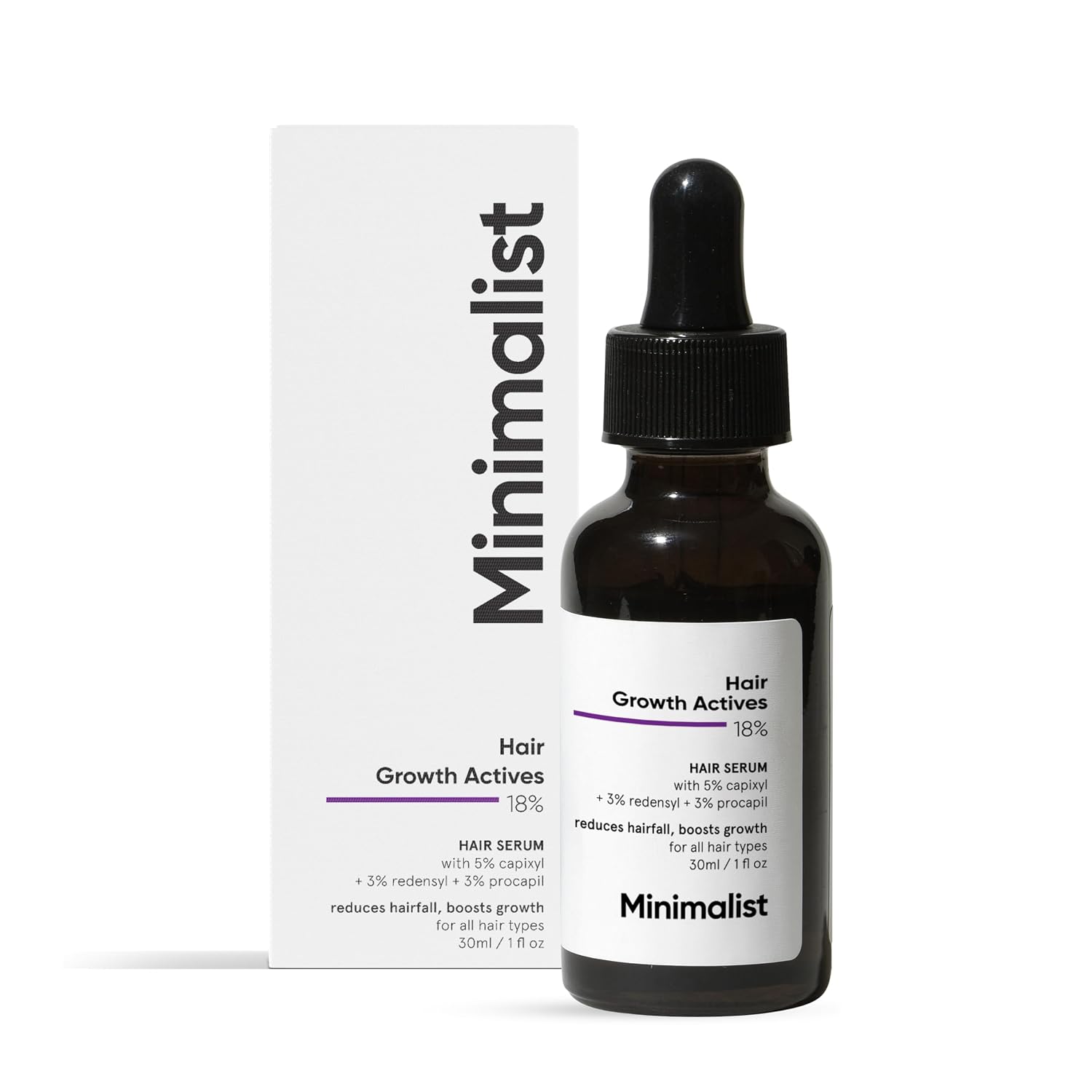
Minimalist Multi-Peptides Hair Growth Serum
Perfect for ingredient-conscious consumers. Completely fragrance-free fluid that combines specified, active doses of Redensyl, Procapil, and Baicapil peptide networks cleanly.
View on Amazon Storefront ↗🌿 Oily Scalp & Scalp Hydration Selections
| Image | Product | Best For / Why We Recommend |
|---|---|---|
| WOW Apple Cider Vinegar Shampoo 3.8★ · 49,887 ratings |
Oily scalps with visible build-up. Nearly 50,000 ratings make it one of the most trusted clarifying shampoos in India. Buy on Amazon → |
|
| Mamaearth Tea Tree Shampoo 3.8★ · 9,031 ratings |
Dandruff-prone or itchy scalps. Tea tree has genuine antifungal evidence as a real active ingredient here. Buy on Amazon → |


🌸 Dry & Damaged Hair
| Image | Product | Best For / Why We Recommend |
|---|---|---|
| Herbal Essences Argan Oil Mask 4.1★ · 749 ratings |
Dry, frizzy, or colour-treated hair. Argan oil has real evidence for reducing protein loss. Buy on Amazon → |
|
| L'Oréal Total Repair 5 Mask 4.2★ · Strong demand |
Recognisable drugstore brand at a fair price. Formulated specifically for repairing damaged hair. Buy on Amazon → |
|
| Moroccanoil Intense Hydrating Mask 4.3★ · 11,507 ratings |
Well-known international salon brand. High review volume for a premium product signals genuine repeat demand. Buy on Amazon → |


Our recommendations are independently determined by cross-referencing published clinical ingredient trials—such as localized human studies for rosemary oils and tea tree extracts—against verified long-term consumer satisfaction data, regional value matrices, and complete formulation transparency within the Indian market. We do not accept paid placements or sponsored listings.
- 🥇 Editor's Pick — Evaluated as our top recommended option.
- 🔄 Alternative Selection — A highly competitive second choice.
- ⭐ Best Value — Reliable structural performance at an accessible price.
- 👑 Premium Pick — High-performance salon or professional-grade variants.
- 🛠️ Auxiliary Tool — Functional accessories to assist your core routine.
🎁 FREE BONUS FOR THE NATURAL MOVE READERS
Download the Monsoon Hair Recovery Companion — a printable workbook with a 30-Day Tracker, Weekly Planner, Hair Type Assessment, Shopping Checklist, and Dermatologist Checklist.
Download Free PDFThe 30-Day Monsoon Hair Challenge
"Because healthy hair isn't built in a day. It's built through small habits repeated consistently."
Frequently Asked Questions
Does everyone experience hair fall during monsoon?
No. Seasonal shedding varies from person to person. Genetics, scalp health, nutrition and overall lifestyle all influence how noticeable it becomes.
How long does monsoon hair fall usually last?
For many people, it is temporary and improves as the season changes. If significant shedding continues beyond 8–12 weeks, consult a dermatologist.
Which shampoo is best for monsoon hair fall?
There isn't one shampoo that's best for everyone. Choose one based on your scalp type — oily scalps benefit from balancing formulations, while dry or chemically treated hair needs more moisturising products.
Should I oil my hair during monsoon?
Yes, if it suits your scalp type. Apply a light layer 30–60 minutes before washing rather than leaving heavy oil overnight, especially if your scalp is oily.
Is rainwater harmful for hair?
Current scientific evidence does not show that rainwater itself causes hair fall. The concern is prolonged dampness and poor scalp hygiene.
Which natural ingredient has the strongest evidence?
Rosemary oil currently has the strongest human evidence for supporting hair growth, while tea tree oil is particularly useful for dandruff and scalp health.
Can home remedies completely stop hair fall?
No. Home remedies may support scalp and hair health, but persistent or severe hair loss often requires medical evaluation to identify the underlying cause.
How can I prevent hair fall in monsoon?
Keep your scalp clean and dry, wash according to your scalp type, avoid sleeping with a damp scalp, and use lightweight products. If shedding continues beyond 8–12 weeks, see a dermatologist.
Why does hair fall continue after the monsoon?
Shedding often shows up 2–3 months after a trigger such as seasonal change, illness or stress, so hair fall can peak after the rains end. If it persists beyond 12 weeks, get it checked.
📚 Continue Your Learning with The Natural Move
- 5 Best Natural Shampoos for Hair Fall
- Dandruff Home Remedies
- Amla Juice Benefits for Monsoon Immunity
- Sulfate-Free Shampoo for Hair Fall: Does It Actually Help? 10 Options Compared
- Vitamin D Deficiency and Hair Loss: Is It Reversible? What the Clinical Evidence Shows
- Hair Care Routine for Oily Scalp COMING SOON
- Hair Care Routine for Dry Hair COMING SOON
- Hair Care Routine for Curly Hair COMING SOON
- Rosemary Oil vs Onion Oil: Which One Really Works? COMING SOON
- Hair Serums: Do They Actually Work? COMING SOON

About the Author
Smita Sonawane · Founder, The Natural Move
Smita founded The Natural Move with one simple belief: natural health advice should be honest, evidence-based, and practical — not driven by fear or marketing. Drawing insights from scientific research, dermatologist guidance, Ayurveda, and extensive product analysis, she helps readers understand what genuinely works, what remains uncertain, and what deserves healthy skepticism.
Because wellness should be guided by evidence, not hype.
Medical Disclaimer: This article is intended for educational purposes only and should not replace professional medical advice, diagnosis or treatment. If you experience persistent, severe or unexplained hair loss, consult a qualified dermatologist or healthcare professional.